Find us on Facebook
|
HOME > HOYES BIO AND RESUME
| | |
|
|
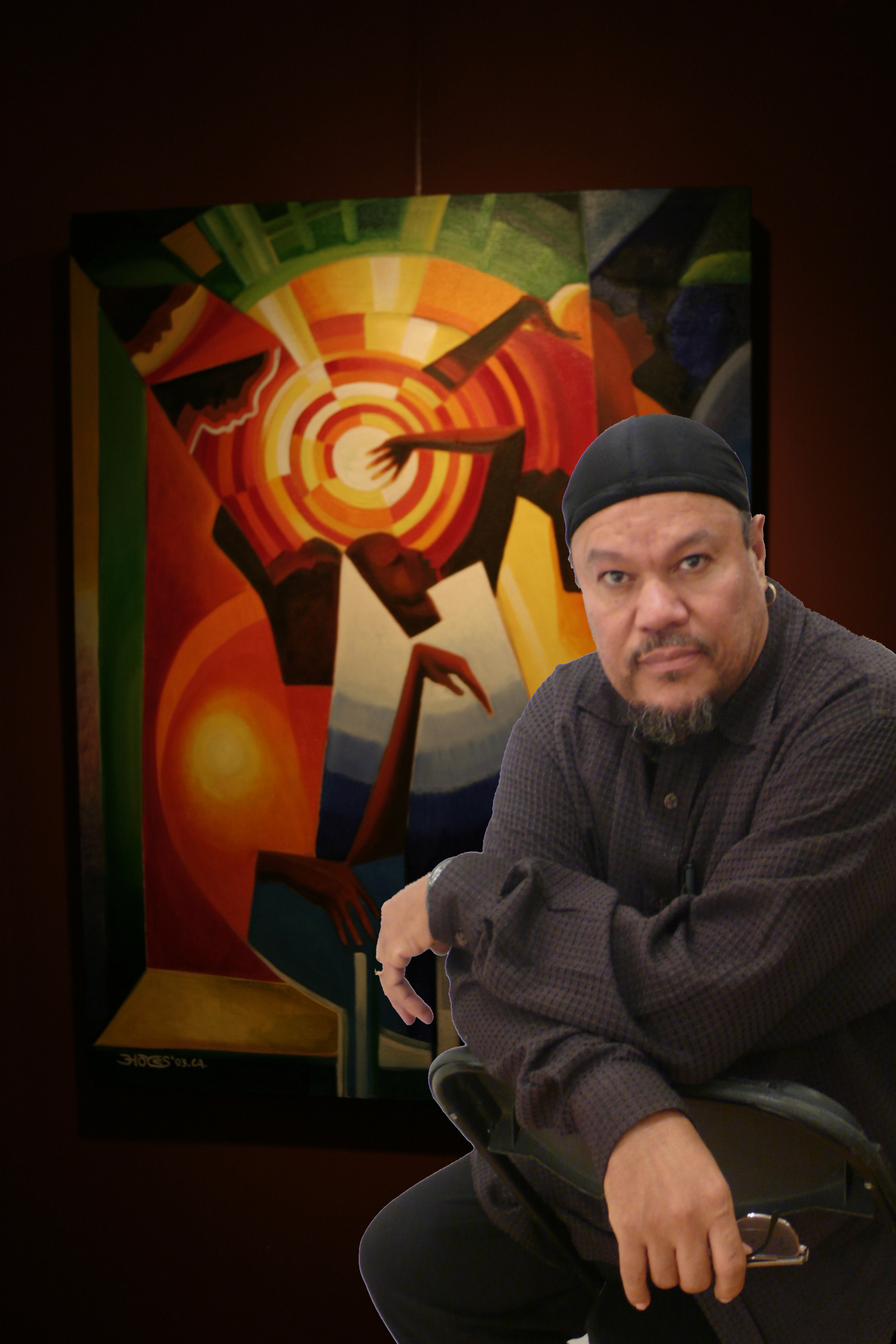
Bernard Stanley
Hoyes
Birth: 1951
Place: Kingston, Jamaica
|
|
BIOGRAPHY
BSH: I have been a
creator of art, symbols of ancestral echoes since a child in Jamaica...
The images I convey symbolize a culmination of these ancestral echoes
brought to classical form. They are contemporary, eternal in spirit and
stand as praise to our existence --past, present and future.
About Bernard Hoyes
Bernard Stanley Hoyes’ professional artist career began at the early age of nine in his home town of Kingston, Jamaica. Bernard's mother sold his wood carvings and watercolors to visitors at the Jamaica Tourist Board to help maintain the household and support his creative efforts.
Hoyes first exposure to professional art education was at the institute of Jamaica, Junior Art Centre. At age 15 He moved to New York to live with his father, attend school and continue his art endeavors. He attended evening classes at the Art Students League, excelling quickly. Hoyes matured as a painter and a sculptor under the apprenticeship of established artists such as Norman Lewis, Huie Lee Smith and John Torres. A Ford Foundation Scholarship was received which allowed him to study with professional artists in a Summer Arts program at Vermont Academy in Saxtons River, Vermont.
Hoyes received a scholarship to finish his academic studies at Vermont Academy for the next two years; where his work was featured in Vermont Life, Stage IV and Vermont 70 Magazines. He was instrumental in the development of a formal Art Department there and at graduation was given a solo exhibition at the Shepardson Center Gallery on Campus. Upon graduation Hoyes received the Frederick Stanley Art Award. When Hoyes attended an alumnus reception some years later, to receive the Florence Sabin Distinguished Alumni Award, he felt pride in seeing the new edifice housing a formal accredited art department.
Hoyes was invited by and given a Board of Trustee Grant at the California College of Arts and Crafts, Oakland, California, now California College of the Arts. He participated in the Graduate art show and received a Bachelor of Fine Arts Degree in painting and design. He set up a studio across the bay in San Francisco and became a full time artist. In 1975 he was participant in the " Black Expo", and assemblage of nationwide Afro-American artists.
At the end of 1975 he moved to Los Angeles to work as a designer for the California Museum of Science and Industry. He later resigned in 1978 returning to his studio to work as a full time artist. He became a member and active participant in many art organizations: LACE, Artist for Economic Action, Artists Equity Association, California Confederation of the Arts, Studio Z, the Graphic Arts Guild and Self-help Graphics.
During the period of the late 70’s, Hoyes worked intensively on his "RAG SERIES," encompassing over 150 pieces. He formed Caribbean Cultural Institute and Caribbean Arts, Inc. to Further expose Caribbean culture to America. The Institute provided classes, workshops and a space for cultural events centered around an Afro-centric theme. Caribbean Arts, Inc., a publication company for graphic arts was formed which led to the creation of the "CARIBBEAN COLLECTION SERIES" and the "WALLPAPER SERIES’ where old wallpaper prints were used as a source for developing new aesthetics. Hoyes’s elegant "KWANZAA HOLIDAY" card series celebrates this African American holiday with functional art was created around this time.
In November 1979 Hoyes had a solo exhibition of the "RAG SERIES" at the William Grant Stills Art Center, a division of the L.A. Municipal Arts Department and a commemorative poster of "RAG NOUVEAU" was published. It has become a signature piece for the artist.
Hoyes has worked with the Los Angeles Citywide Murals Programs. Some of the murals created were: "BLACK FOLK ART IN AMERICA", commissioned by the Craft & Folk Museum (painted with the help of the children from Wilshire Crest and Carthay Elementary Schools). Other mural were created with the assistance of children from the following schools: Sven Lokrantz School for Special Children, Mc Alister High Tri-C Program and 49th Street School for the 1984 Olympics. Hoyes continues to execute Murals in the Los Angeles Community.
Hoyes mural works and other special projects demonstrate his commitment to the public good. worked with First A.M.E. Church’s "In The Spirit Of Contribution," which employed community youth, including African-American and Latino gang members, to get together to recognize each other’s contributions to the spiritual and peaceful unity of Los Angeles, California and the U.S. he developed a student art completion with the Jamaica Awareness Association and the California Afro-American Museum; founded the First Annual Jamaican Art Seminar & Gallery Tour sponsored by California Afro-American Museum; founded the Caribbean Cultural Institute and Caribbean Arts, Inc. a publishing and distribution company in 1982.
In 1982 Hoyes returned to Jamaica and became a lecturer and assessor for the Jamaica School of Art under the direction of Cecil Cooper. He has a solo exhibition at the leading gallery, the BOLIVAR; which received critical acclaim for the exhibition featuring the "Rag Series." The exhibition comprised of over 50 pieces included an oil painting of Jamaican hero Marcus Garvey, which hung in the Government House of Jamaica’s Commission for several years.
The work was brought back to the States and selected by editor Robert A Hill and the University of California Press for the cover of Hill’s 10 volume work on Garvey, THE MARCUS GARVEY & U.N.I.A. PAPERS (1983). The original has traveled with the Garvey Centennial Exhibition sponsored by the Schomburg Center for Research in Black Culture to Museums across the country.
By this time, Hoyes had developed into a master of colorful and rhythmical compositions. On the spiritual significance of his visually engrossing and expressive works, Hoyes explains that he paints "from an intuitive point of view," that during the process the "spirits take possession" and the ritual theme becomes dominant. These insights, his Jamaican heritage and the membership of his paternal family in "revival cults" (an Afro-Christian sect with strong African retention roots) provide cues as to why these paintings are perceived as authentic revelations of altered states of reality.
The picture plane is developed from an intuitive point of view. Very little perspective is coupled with repetition and exaggeration to incorporate elements of African retention's. Field of colors are infused with primaries in harmony. These works are intuitively inspired with no preliminary sketches. Each completed painting suggest the composition and content for the next. Color becomes personified as symbolic as various combinations are used to express national as well as spiritual connotations. The purity of the colors evokes the purity of the Spirit. The movement of the dancers is captured with posing, profiling and the preservation of facial and body expression and full figured framed against each other in dramatic crescendo. Implied lines everywhere work magic in utilizing minimum surface, textures. with much care are there to suggest/state roundness of forms, stress distances or accentuate perspective. Passionately consumed over the years with this work, a highly personal symbolism is projected that signals the arrival of a mature style. Example: "At The Table Of Zion": this painting embraces the ritual in a spectacle of spastic bodies caught in spirit possession, around a "prepared table." As a domestic altar, this one has a "steps feature" at the head which is unique to these cults, representing steps to heaven or steps for the gods to descend to do the bidding of mortals. From this early highlight work, a major painting with all its detailed contents is done from a bird’s eye view to give the sense of majesty and mysticism in the air.
In 1992 this prepared table comes to life in an installation for the exhibition "Massive" at the Museum of African-American Art, Los Angeles and again at Cal State Dominguez Hills Art Gallery. These tables or altars connect and mediate between the terrestrial and celestial, the material and the spiritual, the personal and communal aspect of everyday life. As the work grows from painting to installation, He was able to secure nontraditional installation spaces such as in "Casualties of Contemporary Life" installed in a burnt out building in downtown Kingston, Jamaica, (A casualty itself from the 1977 insurrection). Also done in 1992, it calls attention to the suffering and state of the downtown and its residents, socially and physically. Ironically, Hoyes came back to Los Angeles that same week in the middle of its own insurrection. In response he immediately mount "Apparition of Healing Spirits" at several fire-bombed sites around Los Angeles to help the healing process. Allure, surrender, and love are represented by "Lures" formed from chicken meshes. These transparent figures are accompanied with ceremonial platters, fresh flowers and fruit to create a healing presence in the otherwise bleak and desolate locations of the aftermath of destruction and violence.
The City of Los Angeles Cultural Affairs Department presented an exhibition at The Watts Towers Arts Center in conjunction with the Caribbean Cultural Institute, Division of Caribbean Arts. An exhibition honoring the 25th year of his individual artistic vision, the 25th anniversary of the Watts Tower Arts Center, the 30th year of the anniversary of Kwanzaa, and the 15th year anniversary of Caribbean Arts. Titled: "Journey Through The Spirit: 25 Years of Magical Realism." in December 1995.
For the Galerie Lakaye exhibition "Vodou Reflections." presented in conjunction with UCLA Fowler Museum of Cultural History exhibition "Sacred Arts Of Haitian Vodou." A ceremonial table was installed by Hoyes entitled: "Burnt Offering," it cumulated offerings over a three month period, transforming a domestic altar-into one of personal symbolism.
Hoyes has participated in numerous solo exhibitions here and abroad. He has created murals in the inner city of Los Angeles, CA. He has curated exhibitions and held a position on the board at the Museum of African American Art in Los Angeles. Won awards of Excellence for his famous “Revival Series,” nationally and internationally. His works have been featured in numerous television and film productions, and collected internationally.
Hoyes is primarily recognized as a contemporary painter whose work evolves from a highly intuitive space. He is heralded for his ability to capture spiritual realms on canvas in radiant and brilliant essence. His celebration of traditional African religion and spirituality continues to find universal appeal, exciting audiences worldwide. Oprah Winfrey, Natalie Cole, Steve Harvey, Keenan Ivory Wayans and the National Urban League are among his collectors. Selections of Hoyes' work have been featured in several television shows including the Showtime cult classic series, "Dexter." President Barack Obama has even been photographed in front of his work.
Still acting on the creative impulse, he has a Sculpture garden in progress on a 3 acre Mesa in Desert Hot Springs, CA. Hoyes has developed a non-toxic etching process using an Electrolyte process and have pulled a collection of etchings since 1996. In the summer of 2006 he introduced Kensington Press Revival to the Arts community in Kingston, Jamaica. An Atelier for Printmaking, that shares Electrolyte etching with local artist. Hoyes held a 25 review of the Revival Series entitled ”Lamentation and Celebrations” at the Loves Jazz and Art Center in Omaha, NE. in 2007.
His sojourn to China to live and work with Stonemasons to create the Blue Fin Tuna Commission is well documented. Hoyes has become renowned for his inventive creations. His rarified sculptors transcend the norm and defy comparison. Hoyes journeyed to the Fuzhou City in the Fujian Province of China to craft a six foot three-ton Blue granite sculpture of a blue fin tuna. In 2009, he completed a three City Exhibition Tour of Europe that included an Artist residency in Amsterdam, Netherlands.
Most recently Hoyes' work was on display as part of the "Places of Validation, Art & Progression" exhibit organized by the California African American Museum as part of the Getty initiative "Pacific Standard Time: Art in LA 1945-1980" exhibitions; and he is featured in Lyn Kienholz's coffee table New Art Encyclopedia pictorial, "L.A. Rising: SoCal Artist before 1980" also supported by the Getty Foundation.
In 2012, “Se7en Paintings, a Story in Performance”, was Staged. Choreographed dance, pantomime, drum ensemble, Video and Visual Arts each riffing on the other, weave together a tale rooted in Jamaica’s spiritual traditions. Seven of Hoyes Iconic Paintings from the Revival series came to life on the Ford Theatre Stage in Los Angeles. "Seven Paintings" a Multidisciplinary Performance” which brought Hoyes’ art to life with Performance with vitality and power. Inspired by his popular “Revival Series” reflects the vibrancy of his Jamaica roots in living primary colors.
Will sure to elevate, inspire and revolutionize the way we view art in the future.
Since 2013 hoyes has made his Studio in the Desert his permanent resident. Syncona Mesa, has for 25 years his Artistic Sanctuary, now it has a new Chapter. The Vortex which have been a safe haven for the Creative spirits to permeate his work, has convened.
As Co-curator of The Visual Voice Hoyes focused on key artists, INDEPENDENTS TRENDSETTERS, who significantly influenced the market for African American art by producing, manufacturing and publishing their original works. Using the business principals of marketing and new
technological innovations in presentation. These artists were able to take Black imagery to the mainstream. Leading artists represented in this exhibition include, Ernie Barnes, Varnette Honeywood, Charles Bibbs, Bernard Hoyes, Nathaniel Bustion, Synthia Saint James, INFLUENTIAL MASTERS included Charles White, Samella Lewis, Bill Pajaud, Richard Mayhew, Artis Lane, Jacob Lawrence, Noah Purifoy,and
John Outterbridge. These artists included their personal visions, supported by technical excellence, to amplify new codices of
liberation and validation.
Palm Desert, CA - Visual artist Bernard Hoyes accomplished yet another career defining feat. The master craftsman was commissioned by a private collector to recreate the divinely celebrated winged stallion Pegasus, one of the best-known creatures in Greek mythology. Hoyes utilized rhythmic movement, deliberate intensity and spiritual forwardness that splashes across the canvas. Whether sculpting mythological figures or pairing paint with spirit, Bernard Hoyes continues to present his art as a medium to inspire the viewer to engage in the symbolism used as tool to express the mythological details of Pegasus’ legend. The branches used for the mane of the horse recall Pegasus’ origin, as he was birthed from the goddess Medusa, known for her hair of living venomous snakes. The roots represent his metamorphosis and the trials and exploits he traversed on earth before fulfilling his destiny, rising into heaven as a winged steed and immortalized as a star constellation. The entire work weighs in at 1176 pounds!
The eight-foot “Roots of Pegasus” bronze sculpture was on display until the end of June 2018 as part of the “Below Sea Level” exhibition at the prestigious Melissa Morgan Fine Art Gallery, located on El Paseo in Palm Desert, CA. At the close of the showing, Pegasus ‘flew home to his owner, an accomplished equestrian whose family has raised horses for over three generations! “Roots of Pegasus” is an original in wood and plaster, cast in 100% bronze, with white patina and wood rendered on the plaster portion.
In August of 2017 Hoyes was invited to Berlin, Germany as a featured Artist to Celebrate With the Jamaican Embassy the 55th Anniversary of Jamaica’s Independence
Hoyes has developed a non-toxic etching process using an Electrolyte process. In the summer of 2006 he introduced Kensington Press Revival to the art community with an Exhibition of his Etchings in Kingston, Jamaica; He has plans for an Atelier for printmaking that shares Electrolyte etching with local artists. His art was recently featured at The Mission Hotel and Spa in Riverside, CA as part of their artist in residence program. He curated an Exhibition Visual Voice at Riverside Art Museum during that period. Hoyes just completed a mural for the Kingston Creative in December 2019 to begin effort to reinvigorate the Downtown. January 2020, he completed another in Palm Springs, California for the Church of St.Pauls of the Desert, that spoke to the history of the Desert community and The San Bernardino County Museum Exhibited 30 of his Watercolor Paintings in November 2019. Commentary utilizing Watercolors on Climate Change was featured at San Bernardino County Museum in Redlands, Ca. for four months
www.bernardhoyes.com
Most recently, Hoyes' work was on exhibit as part of the "Places of Validation, Art & Progression" organized by the California African American Museum in conjunction with the Getty initiative "Pacific Standard Time: Art in LA 1945-1980" exhibitions. He is featured in Lyn Kienholz's coffee table Book, New Art Encyclopedia pictorial, "L.A. Rising: SoCal Artist before 1980" supported by the Getty Foundation. Recently his Interdisciplinary work was accepted into the Archives of the Getty Institute. Concern with spiritual testimony, using Contemporary expressions is the driving force that has established a Visual Voice.
The new works have gotten transformative. Proof being, bringing a selection of the Revival Series Paintings to life, on Stage, as an Interdisciplinary creative force, using Visual Arts, Video, Dance, African Drums and Voices. The production titled, “Se7en Paintings, a Story in Performance”, premiered at the Ford Amphitheater Stage in Los Angeles in 2012. "Seven Paintings" is sure to elevate, inspire and revolutionize the way we view art in the future.
New insights into the application of the Painting discipline have since emerged. Starting a Mural Project in Kingston Jamaica, and creating a Mural for the Palm Springs Art Commission that draws together some of the diverse people and perspective of the Coachella Valley.
A Modernist discourse has evolved with his recent works. Raw Materials, technology, and raw textures have appeared. Templates harkening back to the Rag Series, when Raw materials and graphics were prevalent in his exploration. A unified science of all that went before, including neglected concepts and synthesis of varied Consciousness, are being utilized.
Accepting a Commission to create a Public Sculpture in Stainless Steel, Aluminum, and Lucite to be mounted in Kingston.The Sculpture of a pair of Hummingbirds spiraling upwards supported by Stainless Steel Ribbons The Movement is of a Double Helix that represents the common genetic tread of all species. These National Symbols are in a mating ritual that give analogy to the upward movement of the Nation. The Installation was completed during the height of the pandemic in Downtown Kingston on the Plaza of the Port Authority.
| |
| | |
|
|
|